So something unbelievable has happened:
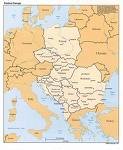
I have been invited to return to Sarajevo in July to present my work about the use of rape and sexual violence in genocide.
There is a conference of the International Association of Genocide Scholars that will be held in Sarajevo this summer and even though it was later than the last minute, I sent them an email with description of my work. They scrambled to put me on a panel titled appropriately, "Mass Rape and Genocide," with other experts in the field.
I am so excited I am nearly busting out of my skin. Toshi has to keep grabbing my ankles as I float off to unbelievable happiness that they actually want ME to be part of this. As you loyal blog-readers know, I am in love with Sarajevo and looking for any excuse to come back. Never in my wildest dreams did I imagine it would be this soon!!
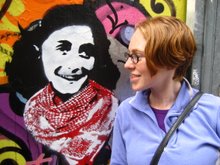
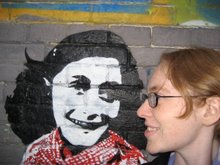
Me and Anne Frank
Day 1: Amsterdam
Showing posts with label Sarajevo. Show all posts
Showing posts with label Sarajevo. Show all posts
Tuesday, June 12, 2007

Tuesday, June 5, 2007
A War on Culture
Librarians, bookbinders, and bibliophiles prepare to cry.

Books, historical documents, and other important cultural elements were purposely destroyed during the war.


Books and libraries, including the national library of Bosnia-Hercegovina were set ablaze by the Serb military and paramilitary forces.

This is the state ofthe national library now. So sad, I couldn't believe it. This used to be such a beautiful building, and it housed some of the most precious relics and historical records of all South Slavic peoples, not just Bosnians.


Schools and places of learning and cultural exchange were also targetted. This is an elementary school that was destroyed in the war (again, on purpose!). I do not know if the children were inside at the time of the attacks, but I would not be suprised if they were. Attacks on children's schools and other gathering places for children were unfortunately typical of this conflict.

Sunday, June 3, 2007
I left my heart in Sarajevo
I know usually there is another place to leave your heart, but I am officially in love with Sarajevo!
The people here are so open and warm. Friends greet each other with kisses on both cheeks, and people of every generation stroll the streets holding hands or linking arms. There is a pulse of life here that is undeniable and even the most sceptical can feel something special here.
People here are so alive... so present in the moment, so connnected with each other.
At first I thought, perhaps this is because of the war and the atrocities they endured. It makes sense... right? When you live through something like that, you become bonded together because of the necessity to do so or perish.
But this is not it at all.
Sarajevans were like this before the war, and I believe this is why and how they were able to survie the longest siege of a city in modern history. Because they value life, each other, and this place they call home.
I am already plotting my return.
Sarajevo Roses
 The skeletal spiral marks on the ground where shells fell on Sarajevo are called "Sarajevo Roses."
 They are all over the city, and once you have seen one, they seem to be everywhere and you cannot help but notice them.
I am told that some have been filled in with red paint, symbolizing blood, but I have not personally seen any like that.
 I found several of these on the steps of the National History Museum of Bosnia and Hercegovina, which was targetted during the war because it held the history of the country. Serb military forces were viciously effective in destroying cultural heritage of the Bosnianpeople. For example, the History Museum was so pummelled by shells and artillery that now you have to enter through this crazy back-way (which I almost didn't find) because the front end was so badly damaged during the war (and who has the money to repair such things?).
Can you imagine walking everyday past the spot where your daughter, husband, mother, or friend was killed and seeing the mark on the ground that will never be gone? This is life in Sarajevo... and life goes on, roses and all.
In the places where more than 7 people were killed, there is often a plaque commemorating their passing.

 I saw "Sarajevo Roses" in Mostar and Dubrovnik too. Maybe there are some in Zagreb, but I didn't know what to look for when I was there before.


 Here are some living Sarajevo Roses, which are part of a monument to the people who died in the Srebrenica Massacre.
Fantastic Meeting!
Yesterday I met in Sarajevo with Senada Kreso, who is a very well-connected and important person in Bosnia-Hercegovina. She was able to tell me many people and organizations that might be interested in collaborating on a project together. When I said I wanted to work with women who survived the war, she said, "the first thing that comes to my mind are the rapes." Anyone who has been along for the "wild and disturbing ride" of my scholarly and clinical interests will know that this is EXACTLY what I wanted to focus on, but there is such a veil of secrecy, protection, and shame around sexual violence that I was fully prepared to compromise my main interests in order to be in alignment with Bosnian/Croatian collaborators.
So this was fantastic... and it only gets better...
By sheer coincidence, Senada had arranged to meet another friend around the same time and place, and when he arrived, it was synchronicity at its best!
He is the associate dean (vice-dean) of the University of Sarajevo (for education) and he is a professor of political science there. The school of social work is affiliated with the school of poly-sci, and he actually teaches the ethics course for social workers.
He was totally jazzed about my ideas, and said that we could have a great collaboration if I came to Sarajevo fr my dissertation. He said that the SW program is still developing and they do not have a lot of strengths in the area of research. So it is a perfect fit, with my rigorous Berkeley research-centric education, skills, and background.
This conversation was one of the most professinally and personally validating experiences of my life so far! It was all I could do to control myself and not go around jumping and singing for joy... (I did a little happy dance later at the hostel though!)
At the end of this talk, he basically invited me to come to Sarajevo and do my project there; he even suggested that maybe they could arrange for 8-10 of the best students (English and Bosnian speaking) to work on the project (for credit) under my direction. This was my dream come true (as many of you who have patiently listened to me as I formulated the idea of working with a team of SW students... but I thought I would get maybe 1-2 at best!). Of course there are still administrative hurdles (including the possible election of a new dean at the University of Sarajevo which sounds like a poliical nightmare). So nothing is definate... but this fellow seemed to feel that I could bring a lot to the school, the students, and the faculty.
This made me feel so good, because I do not want to just go to a place and gather knowledge for my own use: that is missing the point entirely (and it is antithetical to the core of what I believe social work is about). I really want to have a meaningful and mutually beneficial exchange, which sounds like what would happen here!!!
So I am walking on air and this was a fantastic way to spend my last day in Sarajevo.
Friday, June 1, 2007
Sarajevo Tunnel

During the siege of Sarajevo, the UN blocked people from being able to enter or leave the city due to a shameful agreement that they made with the Serb aggressors. This meant that there was no way for food or communications to enter or leave Sarajevo. (scroll down and read the previous post if you have not, so you will understand the background on the siege of sarajevo).
The Bosnians are nothing if not resiliant, and they are brilliant, because they came up with a perfect idea:
They dug a tunnel under the UN controlled area (where the UN would capture and return escapees from Sarajevo- or simply shot them- or watched while the Serbs shot the attempted escapees).
The tunnel connected Sarajevo to the free Bosnian territory in the mountains. The one good thing that the UN did in Sarajevo was to ignore the tunnel entirely, thus allowing Bosnians the ability to enter and leave the city.
 Here I am, visiting one of the last remining segments of this tunnel today.

This is the tunnel museum, put together by a family whose house was one of the entrances to the tunnel during the war. You can see how many bullet holes are in their house, and this seems typical for houses here. Many of them are still riddled with grenade, shell, and bullet damage even 10 years later.
I would like to tell you a little more about the tunnel, which I learned today.
The tunnel was 800 meters long and 1 meter wide and 1.6 meters high (on average; some places in the middle were lower). So even a short person like me would have to stoop. They ran phone cables, electricity, and other necessary utilities through this tunnel, and I am not kidding when I tell you that it was THE ONLY WAY for people or communications to get in and out of Sarajevo during the siege.
There was usually water in the bottom, and you are crouching along in the dark, carrying maybe 35 kilos of food or weapons or whatever on your back and right by your head are high voltage electricity cables. They say it took about 2 hours to go through the tunnel, because people ahead of you might stop (these were old ladies and children, as well as the Bosnian army, which used the tunnel for manuvering and transport of weapons).
In order to go through the tunnel, you had to go to a checkpoint at an alternate location and get official clearance from the Bosnian army. they would give you a stamp, which you presented at the tunnel entrance. Because of precautions like this, the Serbs did not find out about the tunnel for a long time, and even after that, they did not know exactly where the entrances were.
 The entrance to the tunnel was hit by a Serb shell and all the people waiting to use the tunnel were killed (I think more than 50 people were killed and many were wounded). This is the imprint the shell left on the ground. I hope you can see the shape of it is a spiral. They call these "Sarajevo Roses" and you can see them all over the city from all the shelling that happened here. In some places, people have filled the roses in with red paint, representing the blood shed there.
 In places where more than 7 people were killed, there is usually a small plaque commemorating the victims. This is the one by the tunnel entrance, and you can see how many bullet and grenade holes there are in the walls around it. (sorry it is sideways)
 Here is the entrance to the tunnel that I passed through.
And this is the tunnel.

Imagine if your only food or "relative safety" was on the other side of 800 meters of this hell. Imagine how bad things would have to be to take your child through this tunnel, or your grandmother, or yourself.
It is said that almost every Sarajevan who was alive during the war time went through the tunnel at least once.
Thursday, May 31, 2007
My First Mosque

Today I had the chance to visit the main mosque in Sarajevo, built in the 1500s. It is 13 meters by 13 meters wide on the inside, and the domes that form the ceiling are 26 meters tall. Perfect acoustics!
It withstood incredible shelling during the "war of Serbian aggression" as my host called it. This and other mosques were purposely targetted because they were places of cultural and religious significance. He said that the mosque was hit by over 100 different shells and grenades of various caliburs. Luckily (or smartly) the walls are about a meter thick, so they were able to withstand a lot of damage without caving in.
 During the war, they employed specially constructed reinforcements for the domes that form the roof of the mosque. Otherwise, the domes would have collapsed. My host told me that people still came to pray 5 times per day, even during the worst shelling. Even knowing that the mosque was a prime target. It was that important to them. I have to respect that kind of devotion.
 You have to take off your shoes to enter, because the floors are all covered with exquisite rugs. My host told me that the rugs were all gifts from Muslim (and some non-Muslim) countries. The big one furthest toward the altar was given by one of the Shahs of Iran.
 This one was given by an uncle of Saddam Hussein (a long time before Saddam) who was the leader of Iraq.
 On Fridays during the service, there is a specal speech given by the Imam (leader) which talks about principles of Islam and how to live a good Muslim life. The rest of the services (5 times a day, everyday) are given in Arabic, but this small speech is given in the local language, Bosnian. The Imam stands on the top of these stairs for the speech, only on Fridays.
 This part of the mosque has a special name, which unfortunately I cannot recall. It is very important, though, because it points towards Mecca. It is decorated with intricate details, and it is where the Imam speaks from except for that special Friday part.
This is me outside the mosque, in the courtyard, with an incredible fountain where people wash their hands before going in to pray.

When in Sarajevo...

I once had the chance to visit a mosque in high school and I declined because I found it offensive that I would have to cover my hair.
COVER MY HAIR?!? no way, said I.
My red hair has always been an important defining element of my selfhood, my personality, and something that sets me apart from most other people. Before considering myself to be an American, a Bostonian, or even a woman, I was (am) a redhead. Maybe Grandma and other redheads will understand. So it scared me to take away my individuality by covering up my hair at a time of life when I was so much trying to find myself and show the world what was special about me. Of course as a teenager, that is all wrapped up in what I looked like (with some character mixed in too).
Today, I bought this head scarf at the Turkish market here in Sarajevo and the woman who sold it to me showed me several ways to put it on, from everyday to busy day to professional to "special occassion." I chose to use the special occassion look because today is very special to me. My first day in Sarajevo, my first visit to a mosque, and a discovery that I am not my hair!
So the most amazing thing happened after I rushed home to try out the new look...
I loved it!
I expected to feel closed in or covered up or somehow less important or less me. But none of this happened. In fact, quite the opposite. I felt so safe with my hair and head covered, and even alone in my room, I felt more comfortable.
When I walked in the street, women nodded in acknowledgment in a way they had not done this morning. And men averted their eyes, which they certainly had not done this morning. When I went to visit the mosque, the man at the reception asked me if I came just to visit or to pray.
And as for my individuality, no one and nothing could ever take that away.
I stopped for a rest when my feet were tired and watched the women walking by. Not one of them looked the same. Each one had a different print or color, and each one was wrapped in a unique way. Mine is purple (is there any other choice?) and it has some decorative elements that I love. I searched through hundreds of veils and scarves to find the perfect one for me. I see now how silly and closed-minded I was before and I feel grateful that I have had this experience of stepping in to the culture of another woman, even just for a day.
Although I like this look and the feel of it so much that maybe I will continue it when I get back to America. I was thinking about it today, and it could be a way of holding solidarity with Muslims in America, who are facing such strong discrimination today because of the crazy actions of only a few fundamentalists.
One more thought about this... I always imagined that these scarves were held in place so beautifully by the grace of God (or Allah). It turns out they stay put because of a few well-placed pins!
The sunglasses complete the look. This is me, baby!

POP QUIZ!!!!!!!!!!!!!!
Where and why did World War I start?
Here is a hint:

Anyone who guessed Sarajevo gets 10 points!
OK.... so what was the event that set in motion the events of WWI?
Here is another hint:

So here is what they say happened, here in Sarajevo, the center of the universe......
The area that is now Bosnia was once part of the Austro-Hungarian Empire and there was a dude called Franz Ferdinand, who was the arch-duke and heir to the throne of Austria-Hungary.
So he was standing on this bridge (which at the time was called "The Latin Bridge") with his pregnant wife Sofia.
 Here is me with them (OK, OK, it is not really them... but you can willingly suspend your disbelief... this is in the City Museum of Sarajevo).
A Bosnian Serb named Gavrilo Princip who was unimpressed with the occupation of Bosnia by Austria-Hungary (as many Bosnians were) stood by the bank of the river and shot them, killing them both. Now shortly after this, Austria-Hungary declared war on Serbia (because Princip was a Serb) and then everyone else gradually got in the game... WWI had begun.
Some interesting things about the myopic and malliable nature of history... The bridge was called the Latin Bridge when the assasination happened. After that Princip was considered to be a hero and the bridge was renamed "Princip Bridge" through the times of the former Yugoslavia.
But remember, Princip was a Serb by nationality... so after the most recent war perpetrated by Serbs in Bosnia, Princip was renamed a traitor and terrorist, and the bridge was renamed too. Now it is again called "the Latin Bridge." And they are thinking about putting a bust of the slain arch-duke Ferdinand on the bridge because now he is the hero of the story.
 So today I stood on the bridge in the spot where Franz Ferdinand was shot.
 I also stood in the spot where Princip shot him.
 Here are Princips footsteps.
 Here is me literally staiding in Princips footsteps. They used to have this on display on the street in the "place of assasination," but it was removed to inside the museum when Princip became a traitorous villian (by virtue of nothing but his ethnicity and some bad acts by other Serbs in the intervening years). The footsteps are not even on display in the museum. They are under a desk behind the reception area. the only reason I even got to see them was because I asked if it could really be true that they had these foosteps made and then took them away later (it seemed so patently absurd to me). The museum dude brightened up and said, "footsteps, look here!" and moved some junk off of them, beckoned me behind the desk and allowed me to take these photos.
This is the only way to understand history. To stand in the place of each man (and woman) whom we think we cannot relate to or understand. Standing in each of these spots has its own perspective and neither one of them is right or true or wrong or false. They are simply points of view. no more. no less.

Sarajevo
I always wanted to visit Sarajevo, since the winter olympics in 1984 (at the ripe old age of 4).
It is very different here than in Croatia (at least the parts of Croatia I was in). In Zagreb, they laugh about the war... and there was not too much damage. What was damaged has pretty much been fixed, and you would never guess there was a war within the last 15 years.
Sarajevo, on the other hand, holds its war history on its sleeve.

The buildings are riddled with bullet holes, and many houses have been hit by shells and not repaired in the intervening decade. When I was riding the tram from the train station to the hostel, a friendly woman talked to me the whole ride, pointing out important landmarks and other things as we rode by. Passing the street dubbed "sniper alley" during the war, she said in a flat voice as we passed these buildings (each with more than 100 bullet holes and many with gaping holes caused by shells), "too many serbia sniper, no good."
Sarajevo survived the longest siege of a city in modern history (1992-1995-while the world watched and waited), and they have not been quick to cover it up with a veil of collective forgetfulness like their neighbors in Croatia. Perhaps it is because it has not been as easy or affordable to make repairs, perhaps it is because unlike Croatia, in Bosnia they do not want to forget. The world has already forgotten them and they refuse to do the same abuse to themselves.
The hostel where I am staying is in the old town (Turkish quarter). You can hear the people praying in several nearby mosques. I drifted off to sleep last night to the sounds of prayer.
 Today I explored the Turkish market, which has been constantly running since the Ottoman empire and was really the meeting point between east and west in those days. I believe it is one of the oldest constantly running open-air markets in the world. You can buy anything from belly-dance outfits (if only they were tiny enough to fit me!) to hookahs to Turkish coffee sets to prayer rugs to magic lamps (genie costs extra! haha!).

You can buy lots of shirts with writing in Bosnian that look very nice until you ask what they say... because they say swear words and politically charged statements. such as... A shirt will have a picture of Croatia-maybe in a checkerboard pattern, which is the symbol of Croatia, or a picture of Bosnia (like this one) and it will say (rough translation) "fuck the country that does not have Bosnia." So I will be careful about what I buy so I am not making a bad statement. I also saw shirts that said, "do not panic: I am Muslim." I liked those ones.
From the main square to the hostel, you pass by the old Turkish cemetary with probably 50 gravestones. Right behind it is a newer cemetary, for those who died during the siege of Sarajevo. There are so many gravestones. I cried to see it; there were so many white pillars sticking up out of the green grass. And these are only those people who dies in Sarajevo and whose bodies were recovered and who were given proper burial here in Sarajevo. So many others were dumped in mass graves or simply never found for any kind of burial. This is one of the primary things that survivors of war generally want-- a chance to bury their dead with respect and in the proper way. Every time I pass by, there are people crying or praying for their lost loved ones. Also buried there is the prime minister of Bosnia during the war, so there are alwasy soldiers stationed there, protecting his grave against any type of molestation.
Less people speak English here than in Croatia, but now I am very good at communicating with body language. One funny example: We were out of toilet paper at the hostel, and I went to tell the person at he desk. He did not understand any of what I was saying, so I said "toilet" and he shook his head, yes... so he had that part. I said "paper" and his quizzical expression made it clear he had no idea where I was going with this. I made a vbery unladylike gesture of wiping my ass and then said "ne" which means no. He jumped up, blushing a bit, and had understood what I said. Problem solved!
It is very different here than in Croatia (at least the parts of Croatia I was in). In Zagreb, they laugh about the war... and there was not too much damage. What was damaged has pretty much been fixed, and you would never guess there was a war within the last 15 years.
Sarajevo, on the other hand, holds its war history on its sleeve.


The buildings are riddled with bullet holes, and many houses have been hit by shells and not repaired in the intervening decade. When I was riding the tram from the train station to the hostel, a friendly woman talked to me the whole ride, pointing out important landmarks and other things as we rode by. Passing the street dubbed "sniper alley" during the war, she said in a flat voice as we passed these buildings (each with more than 100 bullet holes and many with gaping holes caused by shells), "too many serbia sniper, no good."
Sarajevo survived the longest siege of a city in modern history (1992-1995-while the world watched and waited), and they have not been quick to cover it up with a veil of collective forgetfulness like their neighbors in Croatia. Perhaps it is because it has not been as easy or affordable to make repairs, perhaps it is because unlike Croatia, in Bosnia they do not want to forget. The world has already forgotten them and they refuse to do the same abuse to themselves.
The hostel where I am staying is in the old town (Turkish quarter). You can hear the people praying in several nearby mosques. I drifted off to sleep last night to the sounds of prayer.
 Today I explored the Turkish market, which has been constantly running since the Ottoman empire and was really the meeting point between east and west in those days. I believe it is one of the oldest constantly running open-air markets in the world. You can buy anything from belly-dance outfits (if only they were tiny enough to fit me!) to hookahs to Turkish coffee sets to prayer rugs to magic lamps (genie costs extra! haha!).

You can buy lots of shirts with writing in Bosnian that look very nice until you ask what they say... because they say swear words and politically charged statements. such as... A shirt will have a picture of Croatia-maybe in a checkerboard pattern, which is the symbol of Croatia, or a picture of Bosnia (like this one) and it will say (rough translation) "fuck the country that does not have Bosnia." So I will be careful about what I buy so I am not making a bad statement. I also saw shirts that said, "do not panic: I am Muslim." I liked those ones.
From the main square to the hostel, you pass by the old Turkish cemetary with probably 50 gravestones. Right behind it is a newer cemetary, for those who died during the siege of Sarajevo. There are so many gravestones. I cried to see it; there were so many white pillars sticking up out of the green grass. And these are only those people who dies in Sarajevo and whose bodies were recovered and who were given proper burial here in Sarajevo. So many others were dumped in mass graves or simply never found for any kind of burial. This is one of the primary things that survivors of war generally want-- a chance to bury their dead with respect and in the proper way. Every time I pass by, there are people crying or praying for their lost loved ones. Also buried there is the prime minister of Bosnia during the war, so there are alwasy soldiers stationed there, protecting his grave against any type of molestation.
Less people speak English here than in Croatia, but now I am very good at communicating with body language. One funny example: We were out of toilet paper at the hostel, and I went to tell the person at he desk. He did not understand any of what I was saying, so I said "toilet" and he shook his head, yes... so he had that part. I said "paper" and his quizzical expression made it clear he had no idea where I was going with this. I made a vbery unladylike gesture of wiping my ass and then said "ne" which means no. He jumped up, blushing a bit, and had understood what I said. Problem solved!
Subscribe to:
Posts (Atom)